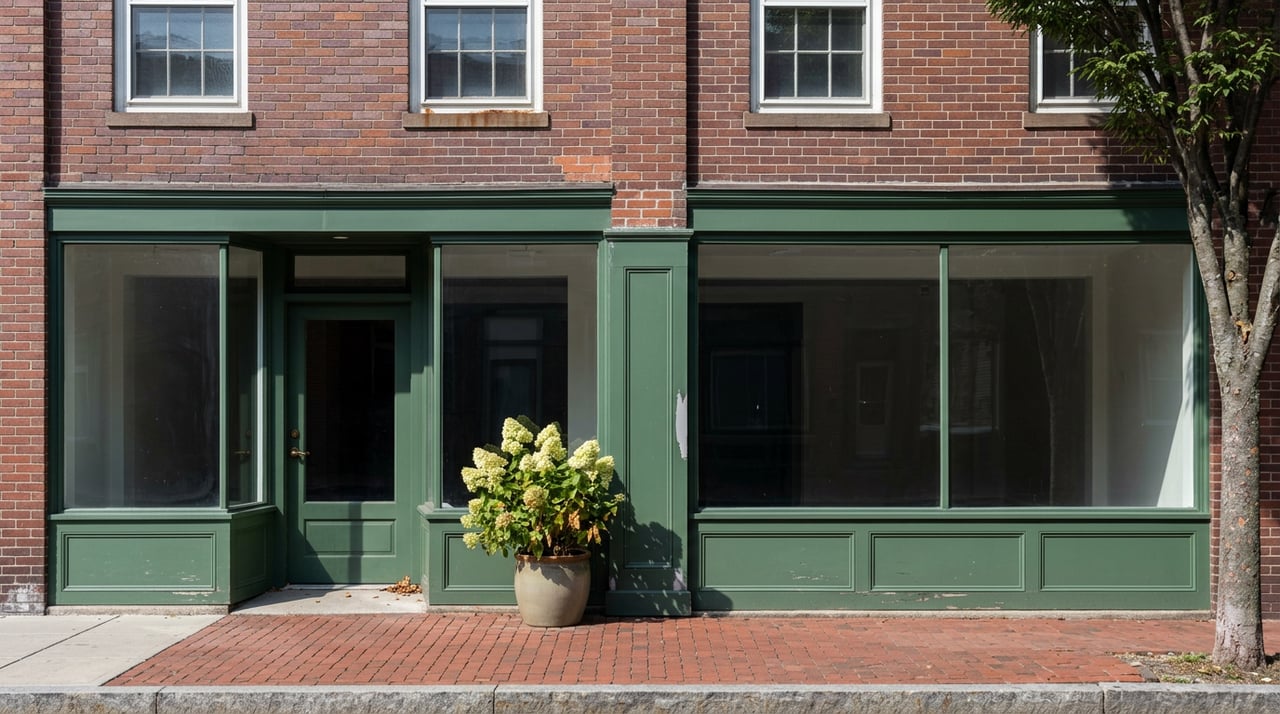
Walk past 660B Centre Street this month and you'll see paper still taped inside the windows, a handwritten sign for something called Gori & Co, and no fixed date for when the doors actually open. That storefront has changed hands at least twice since 2018. Cacao ran there from 2018 to 2022. Bluefin took over in 2024 and closed this past March. Now it's Gori & Co's turn, a shop built around a single dessert format most Bostonians have never ordered by name: kakigori, the shaved-ice tradition the business says it wants to serve "alongside small bites such as onigiri and spam musubi," according to the company's own description reported by Jamaica Plain News.
If you've lived in Jamaica Plain long enough to remember what used to be where, this probably reads like more of the same. Storefronts turn over here. Everyone has a story about the place that used to be a place before that. But look closely at what's actually replacing what's closing this year, and a pattern shows up that's easy to miss if you're only counting openings and closings instead of reading what each new concept actually is.
The trade isn't broader for narrower. It's specific for more specific.
A short walk from Gori & Co, at 597 Centre Street, Krista Kranyak closed her longtime restaurant Ten Tables in December after years of running a full New American dinner menu with cocktails and an organic wine list. What opened in its place this spring wasn't another restaurant with a broader draw. It's Beyond Proof, Boston's first zero-proof bar, serving Mediterranean-inspired small plates alongside a drink menu with no alcohol in it at all. Kranyak didn't pivot to something safer or more general. She built something narrower than what she'd had before.
"Beyond Proof is my response to that shift."
That's Kranyak, describing a personal decision to stop drinking three years before she opened the bar. The restaurant's concept isn't a hedge against a shrinking dining scene. It's a bet that a specific, smaller audience exists and will show up for exactly what she's offering.
A few blocks over, the same thing is happening with ramen. Chef Moe Kuroki closed her nine-seat Oisa Ramen Slurp & Go and is now developing Hinata Shokudo, a Japanese home-cooking restaurant she hopes to open before the end of the year. The new space will seat about 17, nearly double Oisa's capacity, but the concept is if anything more particular: weekly tasting menus, cooking classes, Sunday brunch, and a beer and wine license she's pursuing specifically so she can serve sake. Kuroki said she's building the whole thing herself, no partner and no investor, one step at a time.
Put the two side by side and the pattern is hard to miss.
| Before | After |
|---|---|
| Ten Tables: full dinner menu, cocktails, wine list | Beyond Proof: zero-proof only, Mediterranean small plates |
| Oisa Ramen Slurp & Go: nine seats, ramen only | Hinata Shokudo: 17 seats, tasting menus, sake pending |
Neither business got more general to survive. Both got more specific.
Why a neighborhood with this much turnover can support this much specificity
Centre Street's churn rate is real. Three occupants at a single address across eight years is not a stable retail history by most standards. But the reason a business as narrow as a zero-proof bar or a shaved-ice cafe can open here and not somewhere else has less to do with foot traffic and more to do with what the neighborhood already asks of its residents every summer.
Twelve years running, JP Porchfest turns stoops, yards, and driveways across the neighborhood into a free, unticketed music festival for one Saturday. This year marks the 12th annual event on August 22, from noon to 6 p.m., organized by the nonprofit Dunamis, which has run the festival since 2014. Nobody drives in for Porchfest. You either live close enough to walk to a dozen porches in an afternoon, or you don't go.
Earlier this month, Open Streets Boston closed Centre Street to cars entirely, from Lamartine Street to Lochstead Avenue, for a family-focused Sunday of live music, food trucks, and kids' activities, a format that only works if enough people are willing to trade car access for a few hours in exchange for something that doesn't scale beyond one street on one day. That same weekend, JP Summer Fest brought out a long list of the corridor's small, single-purpose shops, from Blue Frog Bakery to Roundhead Brewing Co.'s beer garden to the record and paper shops tucked between them.
None of this is mass-market programming. It's the opposite. It's a neighborhood that has spent over a decade training its residents to treat "oddly specific and only here" as a feature worth showing up for, not a drawback. A zero-proof bar or a 17-seat sake-serving supper club isn't a risky bet in a place like that. It's exactly the kind of business the neighborhood has already proven it will support.
What's still running, and what to actually do with the rest of August
Not everything in Jamaica Plain is mid-transition. Some of what makes the neighborhood work in August has been running the same way for over a century.
- Jamaica Pond Boathouse, run by the nonprofit Courageous Sailing, rents kayaks, rowboats, and paddleboards on the pond through October, with hours that shift by day of the week. Call ahead or check the boathouse's site before you go.
- The Loring Greenough House, the last surviving 18th-century home in Sumner Hill, hosts Thursdays on the Lawn through the summer with live music, food trucks, and a beer garden on the property.
- JP Porchfest returns Saturday, August 22, from noon to 6 p.m., with a rain date the following day. Performer and host sign-ups are still open through the official festival site.
If you're trying to time a visit to Gori & Co or Hinata Shokudo, both are still in the lead-up to opening as of this writing. Gori & Co's own site had targeted a spring opening as of May, though no firm date had been confirmed by the time this was reported. Hinata Shokudo is aiming for sometime before the end of 2026. Neither is open yet, which means the next few weeks are less about visiting them and more about watching Centre Street's window signage change, one storefront at a time.
That's really the throughline here. A neighborhood doesn't get less interesting by losing a nine-seat ramen counter or a longtime New American restaurant. It gets more interesting when what replaces them is willing to be smaller and stranger than what came before, and the crowd at Porchfest every August is proof there's an audience ready for exactly that.
If you're watching Jamaica Plain closely enough to notice which storefronts are changing hands and what's replacing them, you already know more about this neighborhood than most listings will ever tell you. When the time comes to talk about what that means for property here, Roberta Orlandino is worth a conversation. Let's Connect.