If you price a Seaport luxury condo like a typical Boston condo, you can miss the market by a wide margin. Sellers in this waterfront micro-market are often balancing premium expectations with selective buyer behavior, and that takes a more precise strategy. In this guide, you’ll see how Seaport condos are really priced, what details move value most, and how to position your listing for a stronger result. Let’s dive in.
Why Seaport pricing is different
Seaport is not a broad, one-size-fits-all condo market. Current Redfin data show 61 condos for sale in Seaport District with a median listing price of $2M, compared with 1,641 condos for sale across Boston at a median listing price of $840K. That gap alone shows why citywide averages can be too blunt for luxury pricing in this part of Boston.
The pace is also different. Redfin reports homes in Seaport typically take 53 days to sell, while Boston condos overall are moving in about 31 days. For you as a seller, that means the right opening price matters because buyers often have time to compare inventory carefully.
The Massachusetts Association of Realtors’ March 2026 Seaport update points in the same direction. It shows 13 year-to-date condo closings, a year-to-date median sale price of $1.625M, cumulative days on market of 123, and 93.7% of original list price received. It also notes that Seaport is a small sample market, so one month of activity can look dramatic and should not drive pricing on its own.
Start with the building, not the neighborhood
In Seaport, pricing should begin with same-building sales whenever possible. That is because one address can contain major differences in floor level, outlook, layout, and outdoor space. A neighborhood average may sound useful, but in practice it often misses the details that luxury buyers are paying for.
The strongest method is to build the comp set by building first, then by stack. If you need to go wider, the next-best comparisons are buildings with similar amenity packages, service levels, and view corridors. This approach is much more accurate than treating all Seaport condos as interchangeable.
For luxury sellers, that level of precision matters. A polished marketing plan can create strong exposure, but the pricing still has to reflect how buyers compare one residence against very specific alternatives. In a market like Seaport, buyers are rarely just shopping the neighborhood. They are shopping the exact building experience.
What drives value most in Seaport
Floor and view matter a lot
Within-building pricing spreads in Seaport are significant. Boston’s 2024 condo sales report shows that sales at 133 Seaport Boulevard ranged from about $1,313 per square foot to $1,814 per square foot. At 135 Seaport Boulevard, the range ran from about $1,503 per square foot to $1,939 per square foot, with a penthouse reaching $2,111 per square foot.
The range at 150 Seaport Boulevard was even wider, from about $1,678 per square foot to $3,456 per square foot. That is powerful evidence that floor level, view corridor, terrace access, and penthouse status can move value materially, even within the same building. If your condo has a superior outlook or a higher floor, it may deserve a premium. If it does not, pricing should reflect that honestly.
Outdoor space and stack influence pricing
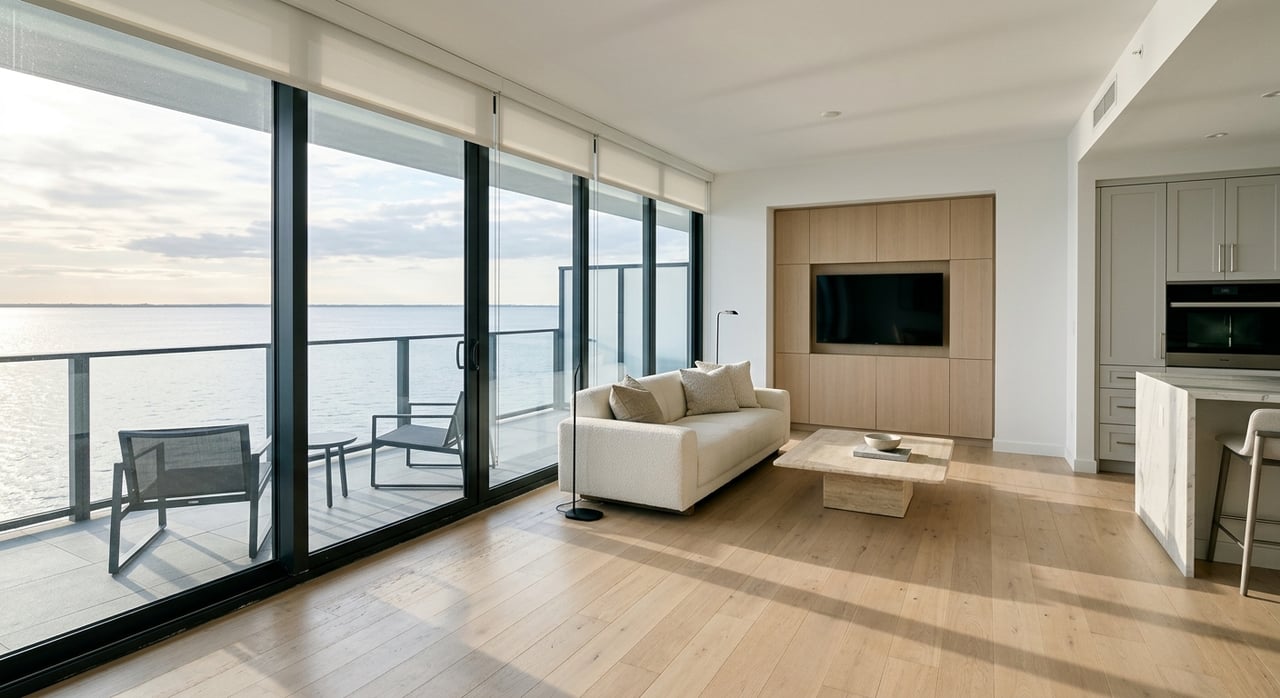
Not all lines in a luxury building trade the same way. A preferred stack with stronger water views, more privacy, or better natural light can command a noticeably higher price than another line with similar square footage. Terrace access can also push value higher, especially when it adds usable outdoor living space in a dense urban setting.
This is one reason price per square foot should be used carefully. It can help frame the conversation, but it should never replace unit-by-unit analysis. In Seaport, two condos with similar size can land in very different pricing bands.
Building reputation creates pricing tiers
The building name matters because buyers are evaluating a full lifestyle offering, not just the residence itself. Boston Global Investors describes Echelon Seaport as the neighborhood’s largest residential project, with 447 condominium units, 285 apartment units, 50,000 square feet of amenity space, concierge and valet service, indoor and outdoor pools, a fitness center, a sky lounge, and terraces.
The St. Regis Residences Boston markets 114 residences with a dedicated amenity floor, butler service, pool, spa, restaurant, guest suites, and on-site parking. Those differences help explain why two Seaport condos with similar square footage may sit in different pricing tiers. When your listing enters the market, buyers are comparing not just floorplans, but brand, service level, and overall experience.
Why overpricing can cost you time
Luxury buyers in Seaport will pay for quality, but recent sales show they still respond to realistic pricing. Redfin data show 22 Liberty Dr Unit 8H closed at $1.95M, or 9% under list, after 80 days. Another sale, 135 Seaport Blvd #1020, closed at $2.0875M, or 4% under list, after 110 days.
A third example, 133 Seaport Blvd #920, closed at $2.13M, or 7% under list, after 160 days. These are strong sale prices, but they also suggest a pattern: if the initial ask is too aggressive, the market may take longer to respond and the eventual outcome can soften. In a selective luxury segment, days on market can shape buyer perception.
That does not mean you should underprice a special property. It means your day-one price should be credible, especially in a market where buyers have options and data. A thoughtful launch often gives you more leverage than an aspirational number that needs multiple adjustments later.
Use current market acceptance, not wishful thinking
One of the most useful benchmarks in Seaport is not the highest asking price in the building. It is the market’s current acceptance level. The March 2026 Massachusetts Association of Realtors data show Seaport condos selling at 93.7% of original list price year to date, which suggests buyers remain engaged but selective.
That figure is helpful because it grounds expectations in actual behavior. If your pricing strategy assumes buyers will ignore current market discipline, you may be setting the listing up for a longer timeline. In a premium submarket, confidence matters, but evidence matters more.
For many sellers, the goal is not simply to list high and hope. The goal is to create the strongest possible position from the start, supported by same-building comps, unit-specific adjustments, and a clear understanding of what buyers are accepting right now.
Price the waterfront risk layer too
Seaport’s location is part of its appeal, but waterfront exposure also shapes buyer thinking. Boston’s official flood-risk guidance notes that the city’s low-lying coastal areas face increasing vulnerability as sea levels rise and storms intensify. Climate Ready Boston’s Seaport appendix identifies the district as a flood-entry area influenced by Fort Point Channel, Boston Harbor, and the Reserve Channel.
For pricing, that does not mean every residence should be discounted. It means buyers may view risk differently depending on floor height, exposure, stack location, and building protections. Higher floors, stronger outlooks, and better-protected lines may be perceived more favorably, while lower or more exposed residences may require more careful positioning.
This is especially important in luxury marketing because sophisticated buyers tend to look beyond finishes and square footage. They may also be weighing resilience, insurance considerations, and long-term asset perception. A pricing strategy that ignores that layer can miss how some buyers are really valuing the property.
A practical pricing framework for sellers
If you are preparing to sell a Seaport luxury condo, this framework can help guide your pricing discussion:
- Start with recent same-building sales
- Narrow the comp set to similar stacks when possible
- Adjust for floor, view, terrace, and penthouse status
- Compare amenity level and service model across competing buildings
- Review current days on market and sale-to-list trends
- Account for how buyers may perceive waterfront exposure and resilience
- Set an opening price that reflects today’s market, not just peak aspirations
This kind of analysis is where experienced local guidance becomes especially valuable. In a nuanced market, details can move the outcome significantly. The best pricing strategy is both analytical and practical.
The bottom line for Seaport sellers
Seaport luxury condo pricing is a building-and-stack exercise, not a neighborhood-average exercise. The data show that floor level, views, outdoor space, amenity package, and buyer sensitivity to waterfront exposure can all shape value in meaningful ways. They also show that buyers in this market respond best to realistic pricing from day one.
If you are considering a sale, a careful pricing strategy can help protect both momentum and negotiating position. That means looking closely at same-building evidence, understanding where your unit fits within its competitive set, and presenting it with the polish the market expects. If you want a tailored strategy for your Seaport condo, Roberta Orlandino offers thoughtful, high-touch guidance grounded in Boston’s luxury market.
FAQs
How should you price a luxury condo in Seaport District, Boston?
- Start with recent same-building sales, then refine value based on stack, floor, view, outdoor space, and the building’s amenity and service profile.
Do views affect Seaport condo prices in Boston?
- Yes. Boston sales data show wide within-building price-per-square-foot ranges, which strongly suggests that view corridors and floor level can materially affect value.
Does the building name matter for Seaport luxury condo pricing?
- Yes. Buildings with different amenity packages, service levels, and brand positioning can fall into separate pricing tiers, even when units are similar in size.
Are Seaport condos selling slower than Boston condos overall?
- Yes. Redfin reports Seaport condos typically taking 53 days to sell compared with 31 days for Boston condos overall.
Should flood risk factor into Seaport condo pricing?
- It can. Boston’s flood-risk guidance identifies Seaport as a low-lying coastal area, so some buyers may weigh floor height, exposure, and building protection when evaluating value.