If you want a Boston home base without the upkeep of a full-time primary residence, Midtown and the Financial District can make a strong case. For many buyers, the appeal is simple: you get a central location, strong transit access, and a building setup designed around convenience. If you are considering a pied-à-terre in this part of Boston, understanding how the market, buildings, and local rules work can help you buy with more confidence. Let’s dive in.
Why Downtown Boston Fits This Lifestyle
In Boston, a pied-à-terre search in Midtown and the Financial District usually means the downtown core around Downtown Crossing, the Theater District edge, and the Financial District. According to the City of Boston’s Downtown neighborhood overview, this area has long served as the city’s hub, with a mix of offices, condos, apartments, hotels, and major attractions. That blend matters because it creates a practical, service-oriented environment for buyers who are in town often but not always.
The district is also compact in a way that supports short stays. The Downtown Boston Alliance describes a 34-block, 100-acre district with extensive commercial space, condo towers, and market-rate apartment complexes. For you as a buyer, that often translates to an easy in-and-out lifestyle, with daily needs and transit connections close at hand.
What Makes A Good Pied-à-Terre Here
A pied-à-terre is rarely about maximizing square footage. In this part of Boston, it is more often about reducing friction every time you arrive, stay, and leave. That is why the right building can matter as much as the right unit.
Useful features often include:
- Staffed entry
- Concierge or doorman service
- Valet or garage parking
- Package handling
- Reliable elevator access
- Fitness or lounge space that supports short stays
- Business or conference space for work trips
Representative full-service towers in downtown Boston market features such as 24/7 doorman and concierge service, valet parking, package acceptance, fitness spaces, lounges, and business amenities. While every building is different, these kinds of services often carry real day-to-day value for part-time owners.
Prioritize Convenience Over Size
For many pied-à-terre buyers, a well-designed one-bedroom or one-plus layout in a full-service building can be a better fit than a larger home with fewer services. The reason is practical. If you are using the property for business trips, frequent visits, or a flexible city base, easy ownership often matters more than extra rooms.
That does not mean larger units are the wrong choice. It simply means your buying criteria should stay tied to how you will actually use the property. A building that makes arrival, security, parking, package delivery, and short-notice stays feel effortless may offer more value than square footage alone suggests.
Midtown And Financial District Access
One of the biggest advantages of this micro-market is access. The downtown core places you close to the MBTA network, South Station, Logan Airport connections, Bluebikes, and the I-90 and I-93 junction. If your pied-à-terre is meant to support a busy work schedule or frequent travel, this infrastructure can be one of the strongest reasons to focus your search here.
The district also supports a use pattern that many part-time owners want. The Downtown Boston Alliance notes that more than 200,000 people work downtown each day, while Downtown Crossing sees substantial pedestrian traffic and ongoing neighborhood programming. That means weekday energy can feel more office-oriented, while weekends are increasingly shaped by restaurants, visitors, and local events.
Understand The 24/7 Neighborhood Shift
Downtown Boston is evolving, and that matters if you are buying for both present use and future resale. In its downtown revitalization work, the City has emphasized a long-term move away from dependence on the traditional five-day office cycle. The broader goal is a more active, all-hours neighborhood with a stronger residential base.
That shift could be meaningful for pied-à-terre buyers. A more residential downtown may support a livelier off-hours experience and a stronger sense of neighborhood continuity over time. At the same time, office-to-residential conversion efforts may also bring additional housing supply, which is worth keeping in mind when you think about future competition at resale.
Know The Condo Rules Before You Buy
This is one of the most important parts of the process. In Massachusetts, condominiums are governed by the master deed, deed, bylaws, and Chapter 183A. Unit owners must comply with condo documents, and associations may adopt rules covering use and maintenance. The statute also states that a unit cannot be used for a purpose prohibited in the master deed.
In plain terms, you should not assume your intended use is allowed just because you own the unit. Before you buy, review the condo documents carefully to understand occupancy expectations, leasing rules, move-in procedures, pet rules if relevant, and any restrictions that could affect part-time ownership.
Short-Term Rental Limits Matter
If part of your plan includes short-term rental income, you need to be especially careful. Boston’s short-term rental rules allow rentals of fewer than 28 days only in certain owner-occupied property types, and eligibility generally requires the owner to live in the property as a primary residence for at least nine of the prior or next 12 months. That requirement is a major limitation for a true pied-à-terre in a downtown condo tower.
The city also requires registration, a business certificate, annual renewal, and compliance steps tied to listings and notifications. In practice, many part-time owners will find that a downtown condo is not a fit for Airbnb-style use. Both city rules and condo documents need to support your plan, and often they will not.
Long-Term Rental Rules Still Apply
Even if you are not planning short-term rentals, long-term renting comes with city requirements. Boston requires annual rental property registration, including in situations where a property is vacant, under renovation, or rented to relatives. The city also inspects registered rental properties at least once every five years.
For a buyer, the key takeaway is straightforward. If you think you may lease the property at any point, confirm both the building’s leasing rules and the city’s registration requirements early in the process. It is much easier to underwrite the property correctly before you close than to discover limitations later.
What Resale Looks Like In This Market
Downtown Boston and the Financial District sit in a premium price tier relative to the broader condo market. As cited in the research report, Redfin’s Downtown Boston market snapshot showed a median sale price of $1.93 million and a median of 69 days on market as of February 2026. The same research report notes that Realtor.com showed the Financial District with 37 homes for sale, a median list price of $2.46 million, a median price per square foot of $1.9K, a median of 42 days on market, and a 96 percent sale-to-list ratio.
These numbers are not directly comparable across sources, but they do point to a high-value, relatively thin market. For you, that means resale can depend heavily on product type, building reputation, floor plan efficiency, and whether the unit feels turnkey for the next buyer.
Features That May Support Resale
In a convenience-driven micro-market, resale strength often comes from making ownership feel easy. While no feature guarantees future performance, many buyers in this segment are likely to respond to the same things that may attract you now.
Features that may help a unit stand out include:
- A full-service building with reliable staffing
- Efficient, flexible layout
- Strong security and entry management
- Practical parking access or excellent transit access
- Amenity spaces that support real daily use
- A polished, low-maintenance overall ownership experience
This approach aligns with how many downtown buyers evaluate value. In a district shaped by service-heavy towers and frequent-visitor demand, convenience is often part of the product itself.
How This Compares With Nearby Historic Areas
If you are deciding between Midtown or the Financial District and another central Boston neighborhood, the choice often comes down to lifestyle fit. Downtown tends to offer more of the turnkey, staffed, tower-style experience. Nearby historic districts often offer a different appeal rooted in architecture, block pattern, and residential character.
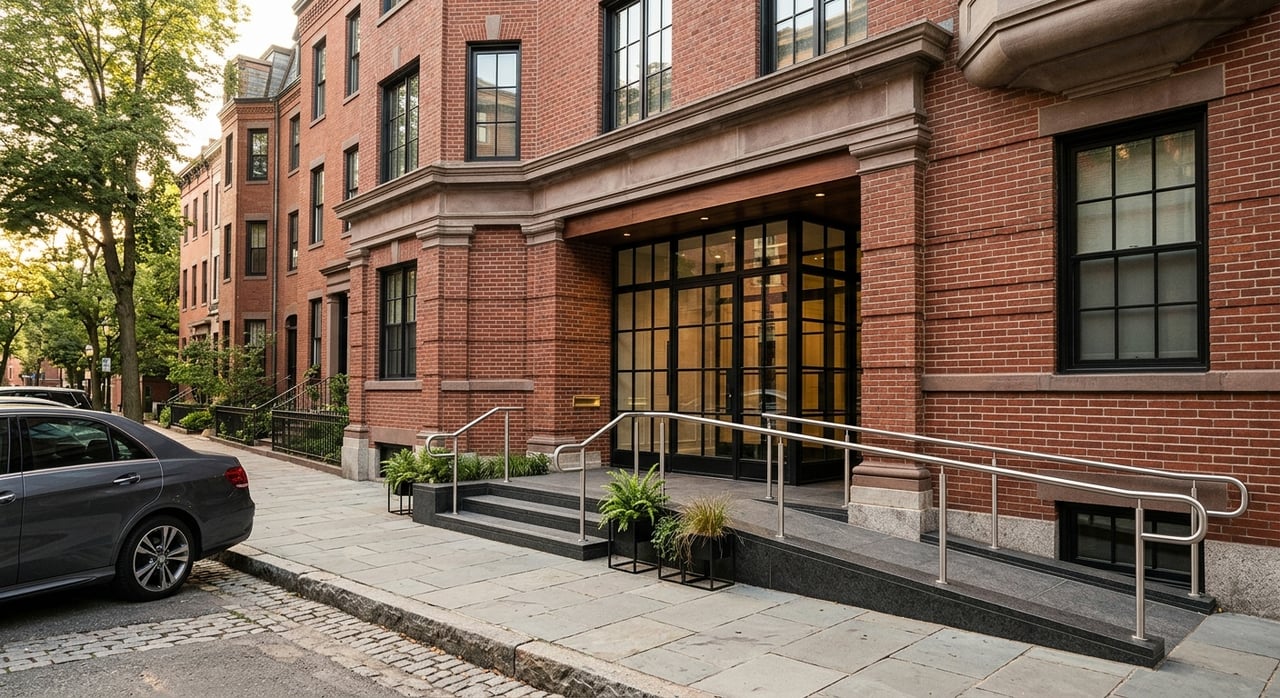
The City of Boston’s Back Bay overview describes Back Bay as a protected historic district and an early planned residential district. The same research report notes Beacon Hill’s historic brick rowhouses and narrow streets, Bay Village’s tree-lined brick rowhouse setting, and the North End’s dense, primarily residential pattern. For many buyers, the tradeoff is simple: services and convenience versus historic continuity and architectural character.
Neither approach is inherently better. The right choice depends on whether you want your Boston home base to function more like a polished lock-and-leave residence or a more traditional neighborhood home.
A Smart Buying Approach
If you are exploring a pied-à-terre purchase in Midtown or the Financial District, keep your decision centered on how you will live, travel, and own. The most successful purchases here are often the ones where the building, the rules, and the location all match the owner’s actual pattern of use.
That means asking focused questions early:
- How often will you use the home?
- Do you need parking, concierge support, or package handling?
- Is your priority transit access, walkability, or airport convenience?
- Could you ever want to lease the property?
- Do the condo documents support that plan?
- Will the unit likely appeal to the next convenience-focused buyer later on?
When you answer those questions honestly, the search becomes much clearer.
If you are weighing a Boston pied-à-terre and want grounded advice on building fit, resale considerations, and the nuances of central Boston ownership, Roberta Orlandino offers the kind of seasoned, local guidance that can make a complex decision feel much more straightforward.
FAQs
What is a pied-à-terre in Midtown or the Financial District?
- A pied-à-terre in this part of Boston is typically a part-time city residence used as a convenient home base for work trips, frequent visits, or flexible urban living.
What building features matter most for a Boston pied-à-terre buyer?
- The most useful features are usually staffed entry, concierge or doorman service, parking, package handling, elevator access, and amenities that make short stays easier.
Can you use a Financial District Boston condo as a short-term rental?
- Often, no. Boston’s short-term rental rules generally require the property to be your primary residence for at least nine of the prior or next 12 months, which can limit true pied-à-terre use in downtown condo buildings.
Do Boston condo documents matter when buying a pied-à-terre?
- Yes. Condo bylaws, the master deed, and related documents can restrict how you use or lease the unit, so they should be reviewed carefully before you buy.
How does Downtown Boston compare with Back Bay or Beacon Hill for part-time ownership?
- Downtown and the Financial District usually offer more full-service, lock-and-leave tower living, while Back Bay and Beacon Hill more often appeal to buyers seeking historic architecture and a different residential experience.
Is resale important when buying a pied-à-terre in downtown Boston?
- Yes. In a premium and relatively limited market, many buyers look for units that feel easy to own, well-located, and well-supported by building services, which can matter at resale.